By Izzie Dew, Behaviour Team Manager
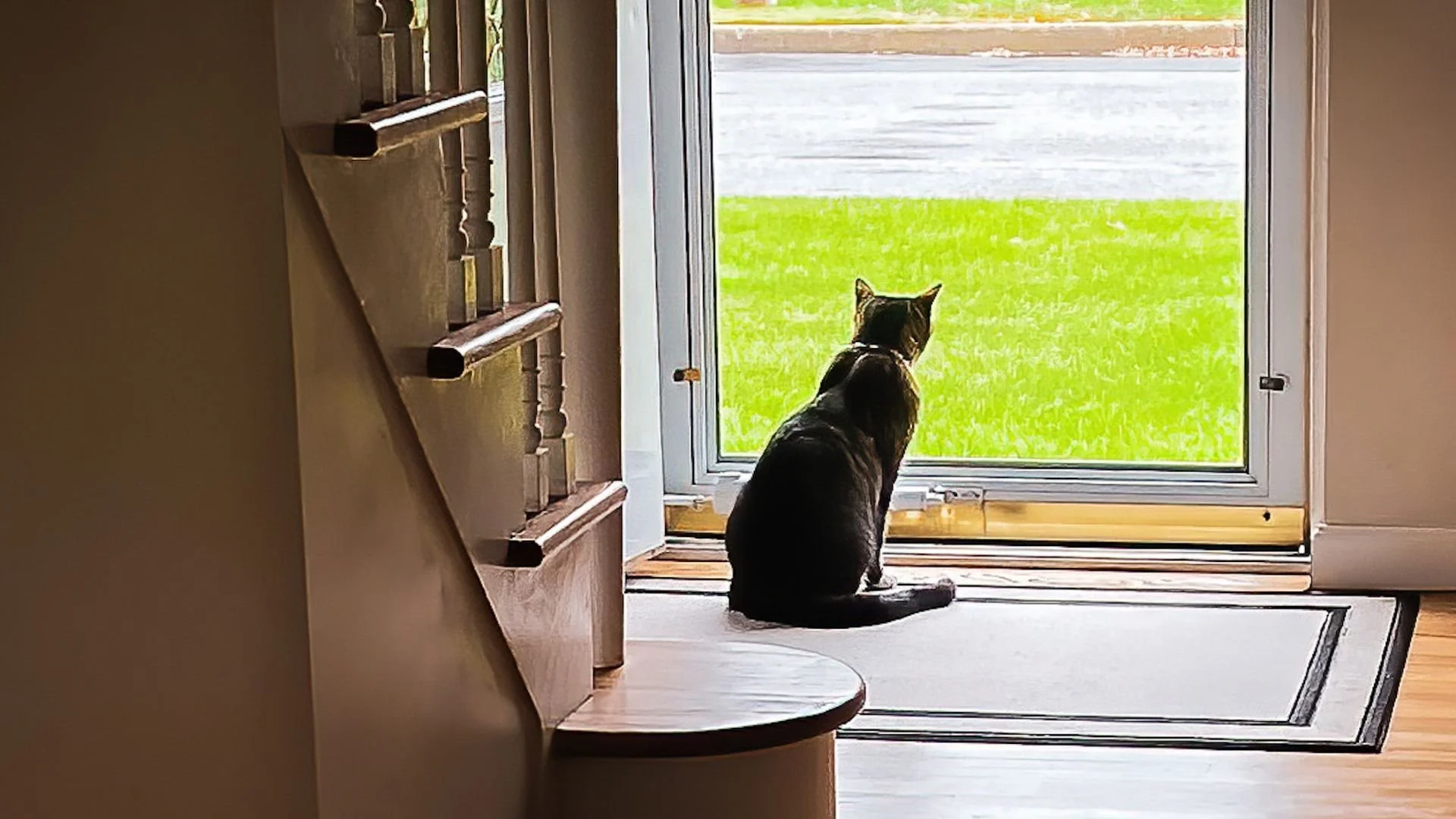
You’ve made the decision to start keeping your cat at home. You’ve bought the toys. Created a comfy window spot. Maybe even invested in a scratching post. And your cat? They’re sitting at the door meowing or scratching.
They want out. They want you to know they want out. And now you’re thinking: “Am I doing the right thing?”
If this sounds familiar, you’re definitely not alone.
“They’re crying at the door. Does that mean they’re unhappy?”
Not necessarily. If your cat has roamed for years, going outside is part of a routine they know and have come to expect.
In their mind, the system has always been pretty simple: Meow at door → door opens → neighbourhood adventure begins.
So, when the door suddenly stops opening, it makes sense that this might cause some frustration for them. Meowing, pacing, scratching at the door can all happen while they adjust.
If your cat seems particularly distressed by the transition and you're struggling to redirect them to another activity, we recommend that you see your vet for more specific advice.
“But they sound so sad…”
This is usually what gets us. When your cat is crying at the door, it can feel awful to keep it closed.
But remember why you started making the change. Once your cat is roaming, you can’t control the cars, other cats, dogs, disease, injuries, toxins or other hazards they might encounter.
Keeping them home isn’t a punishment, it’s about making their world safer. They may feel frustrated while they learn the new routine, but frustration in that moment doesn’t mean the change is wrong.
Try not to let the meowing open the door
This one is important. Imagine your cat meows for five minutes. Nothing. Ten minutes. Still nothing. Fifteen minutes. You finally crack and open the door.
What did your cat just learn?
Excellent. Fifteen minutes of meowing works.
This isn’t them trying to be difficult, this is normal learning.
Instead redirect them to another activity. Engage in an interactive play session. Provide them with a food puzzle.
Work out what they want
The door itself is unlikely to be the exciting part. Think about what normally happens once they get through it.
Are they looking for something to chase? Try a wand toy or short play session. Do they normally go outside before dinner? Try a food puzzle or make that time part of their new meal routine. Are they desperate to see what’s happening outside? Set up a comfortable window perch. Do they love exploring?
Try boxes, tunnels, hiding spots or a new safe area of the house. Do they enjoy hunting? Give them something they can stalk, chase and then catch.
The message you’re trying to build is: The door might stay closed, but life is still great in here.
Replace the old routine with a new one
Cats generally love knowing what happens next. If your cat used to head out at 5pm every day, try making 5pm the start of something else. For example:
5:00pm: play
5:15pm: dinner or food puzzle
5:30pm: window patrol and a nap
Over time, their expectation can change from: “This is when you open the door.”
to: “This is when I chase something, eat dinner and fall asleep somewhere inconvenient.”
A solid evening. Keep this routine consistent to keep them happy.
What if they’re still really struggling?
Slow things down. There’s no gold medal for transitioning your cat overnight. If they’re extremely unsettled, stay at the current stage a little longer and check that your home is meeting their needs.
Do they have:
somewhere to climb?
something to scratch?
quiet hiding and safe resting spots?
regular play?
things to explore?
clean litter trays?
easy access to food and water?
a routine?
somewhere to retreat from noise, people or other pets?
Sometimes we can focus so much on stopping the roaming that we forget to replace what the cat enjoyed about it.
If your cat seems particularly distressed or is taking what feels like a long time to acclimate to indoor-only life, we recommend consulting with your vet.
You love your cat.
Of course, it’s hard not to give in when they’re sitting at the door meowing. But caring for them doesn’t always mean giving them exactly what they want in that moment. Sometimes it means helping them adjust to something that keeps them safer in the long run.
Remember that you’re not trying to take away their happiness. You’re helping them find it somewhere safer. Don’t let a few rough days convince you it isn’t working.
The first few days, or even weeks, aren’t necessarily what life at home will look like forever. Your cat is learning a new routine. And you’re learning what works for them too. There’ll be good days, harder days and potentially a night where your cat decides 3am is the perfect time to reopen negotiations. Keep going, stay consistent, andkeep home rewarding.
And look for the little wins. The first time they settle instead of pacing. The first nap away from the door. The first time they choose a toy instead of meowing to leave. Those moments matter so celebrate them! Reward your cat with a treat or some playtime.
Changing your cat’s routine from roaming to being safe at home is a transition, not an overnight switch.
Still figuring out what works for your cat?
Our From Roam to Home Guide walks you through the transition step by step, including how to prepare your home, build a new routine and know when your cat is ready to progress.